
You are here
When Cranial Axon Growth and Guidance Goes Awry
 engle_3-3-26.pdf
Speakers

Abstract
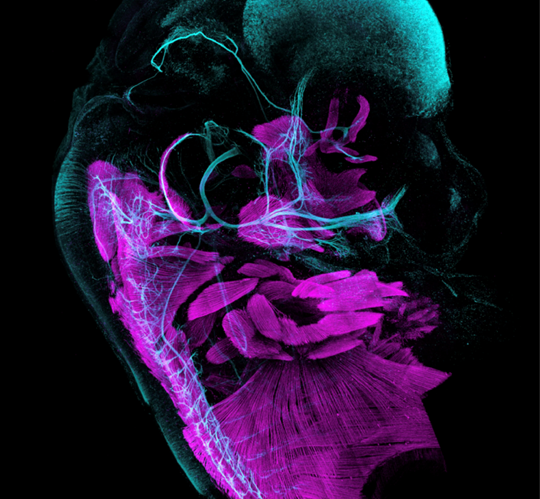 As a child neurologist trained also in pediatrics and neuropathology, I hypothesized that my patients born with complex eye-movement disorders, once thought to be myogenic, may have defects in cranial motor neuron development. As a physician-scientist, I meticulously phenotyped these patients, including ascertainment of clinical data, MR imaging, and neuropathological studies. This has led to our definition of multiple related human malformation syndromes that extend far beyond eye movements and result from coding and noncoding genetic variation. Consistent with my initial hypothesis, our modeling reveals that these genetic disorders perturb steps in the development of cranial motor neurons or the growth and guidance of their axons; hence, they are now referred to as the congenital cranial dysinnervation disorders (CCDDs). The disorders that alter motor neuron identity have led us to extensive transcriptomic and epigenomic analyses of the embryonic mouse brainstem and cranial motor neurons to better define cranial motor neuron development and to interpret noncoding genetic variation in the context of specific regulatory regions. By contrast, many of the disorders that result from altered axon growth or guidance do so by directly or indirectly perturbing the neuronal cytoskeleton through alterations in cell signaling, motor transport, or microtubule dynamics, potentially converging on a common mechanism of selective vulnerability. Thus, coupling CCDD gene discovery with targeted mechanistic studies provides an opportunity to explore and validate mechanisms underlying these human disorders. This knowledge can be taken back to the clinic with the goal of understanding human development and enhancing patient care.