You are here
Probing and Rescuing Dysfunctional Brain Circuits in Depression
 liston_12-16-25.pdf
Speakers

Abstract
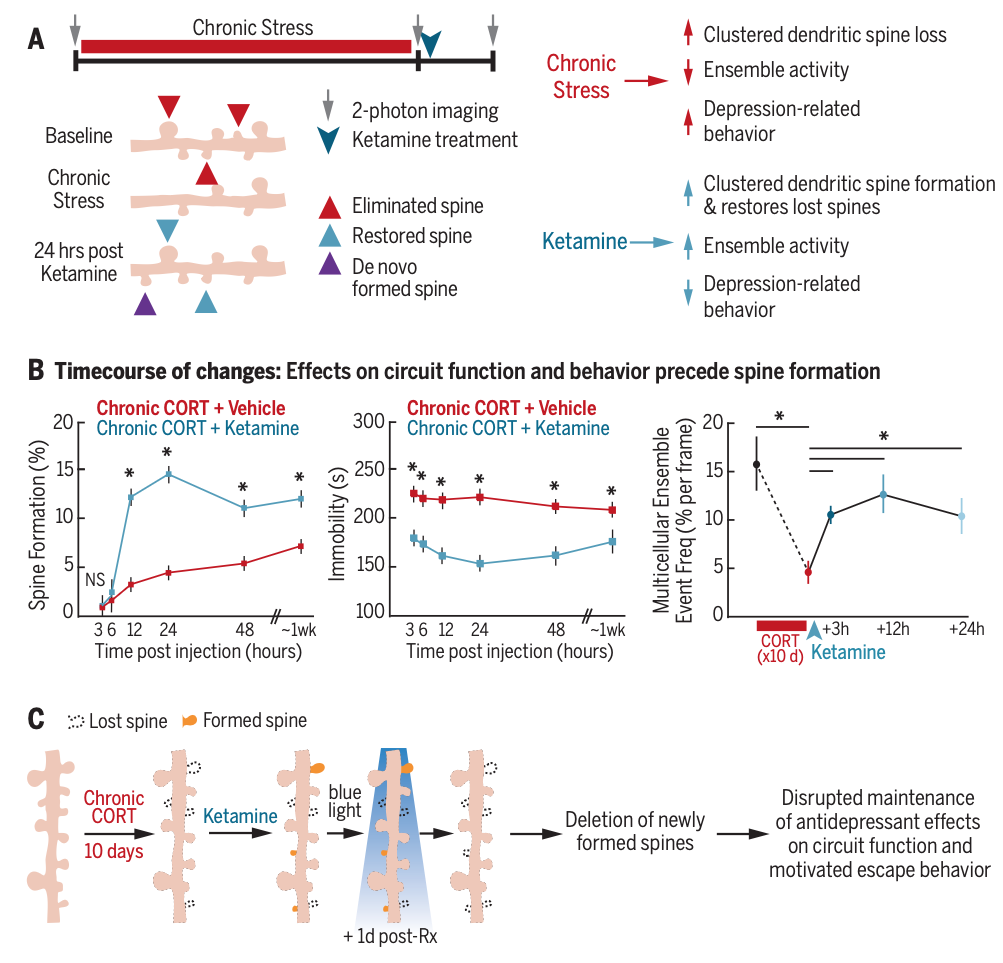
Depression is a fundamentally episodic psychiatric disorder defined by periods of low mood interposed between periods of wellness, but the mechanisms that drive mood state transitions over time are not well understood. I will present findings from a series of parallel studies in preclinical mouse models and in patients with depression aimed at identifying cellular and circuit-level mechanisms that initiate and sustain mood state switches. Through repeated longitudinal imaging of medial prefrontal microcircuits in the living brain, we found that synaptogenesis in prefrontal cortical projection neurons plays a critical role in sustaining specific antidepressant behavioral effects and maintaining long-term behavioral remission after ketamine treatment. Depression-related behavior was associated with targeted, branch-specific elimination of postsynaptic dendritic spines. Antidepressant-dose ketamine reversed these effects by selectively rescuing eliminated spines and restoring coordinated activity in multicellular ensembles within the anterior cingulate, which support effortful reward-seeking behavior through projections to the nucleus accumbens. Prefrontal synaptogenesis was required for the long-term maintenance of antidepressant effects on behavior but not for their initial induction, which was driven in part by hyperpolarizing somatostatin interneurons and disinhibiting projection neurons.